Ask three engineering teams what it means for a release to be ready, and you might get three different answers.
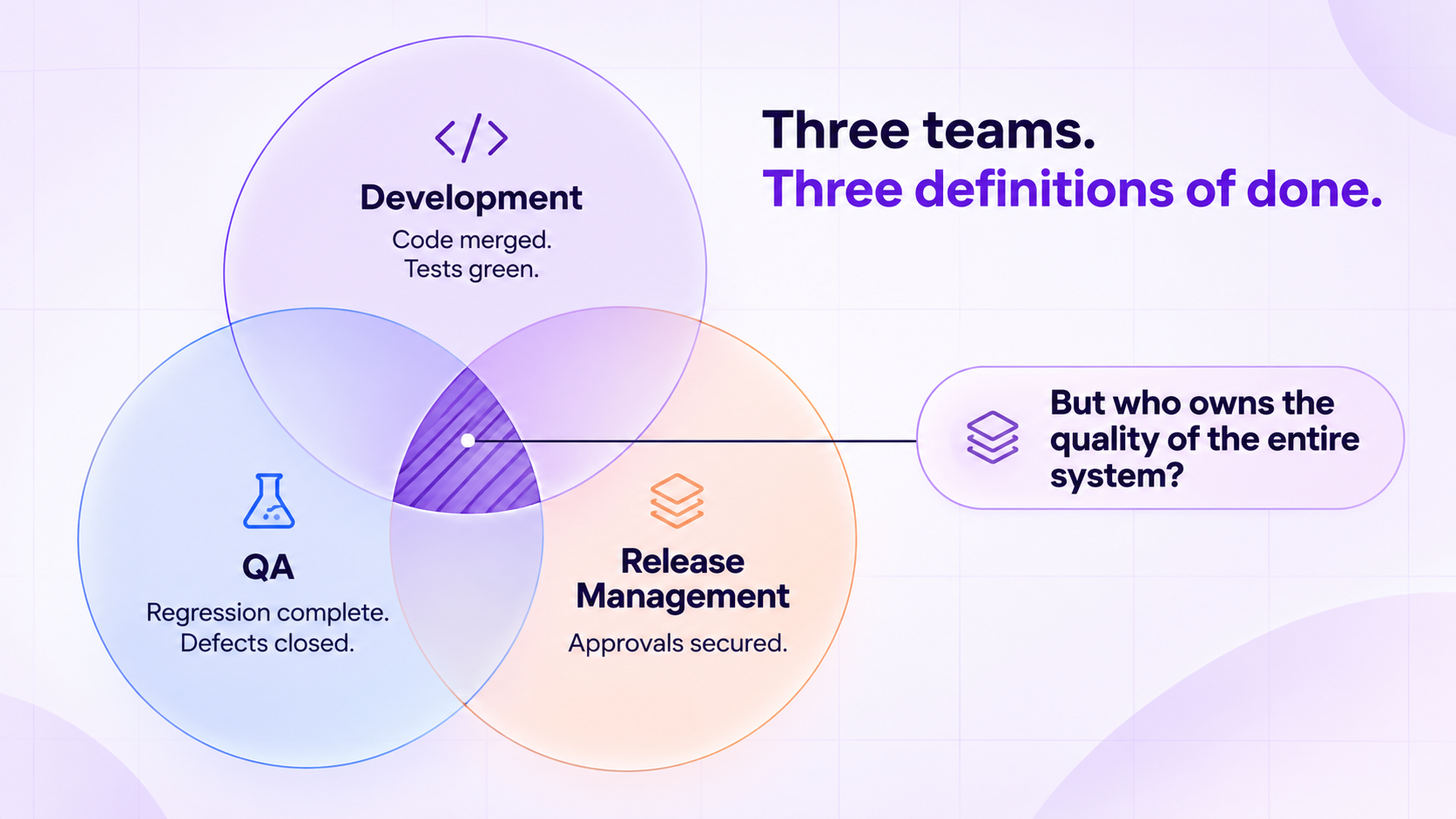
Everyone has done their part. But those individual sign-offs don’t necessarily tell us whether the entire business workflow is ready.
That’s the blind spot. Test evidence is spread across dashboards, reports, and audit trails, while dependencies between systems can remain difficult to see.
And when things go wrong, the financial consequences can be significant. Splunk estimates that downtime costs organisations an average of $15,000 per minute.
The real question isn’t whether every team has completed its checks. It’s whether anyone has a clear picture of the risks across the entire release.
What Is the Governance Gap in Enterprise Software Quality?
The governance gap in enterprise software quality is a visibility and accountability problem. Teams may successfully validate their individual components, services, and integrations, yet lack a shared view of how everything performs as one interconnected system.
The distinction becomes clearer when you look at what each approach focuses on:
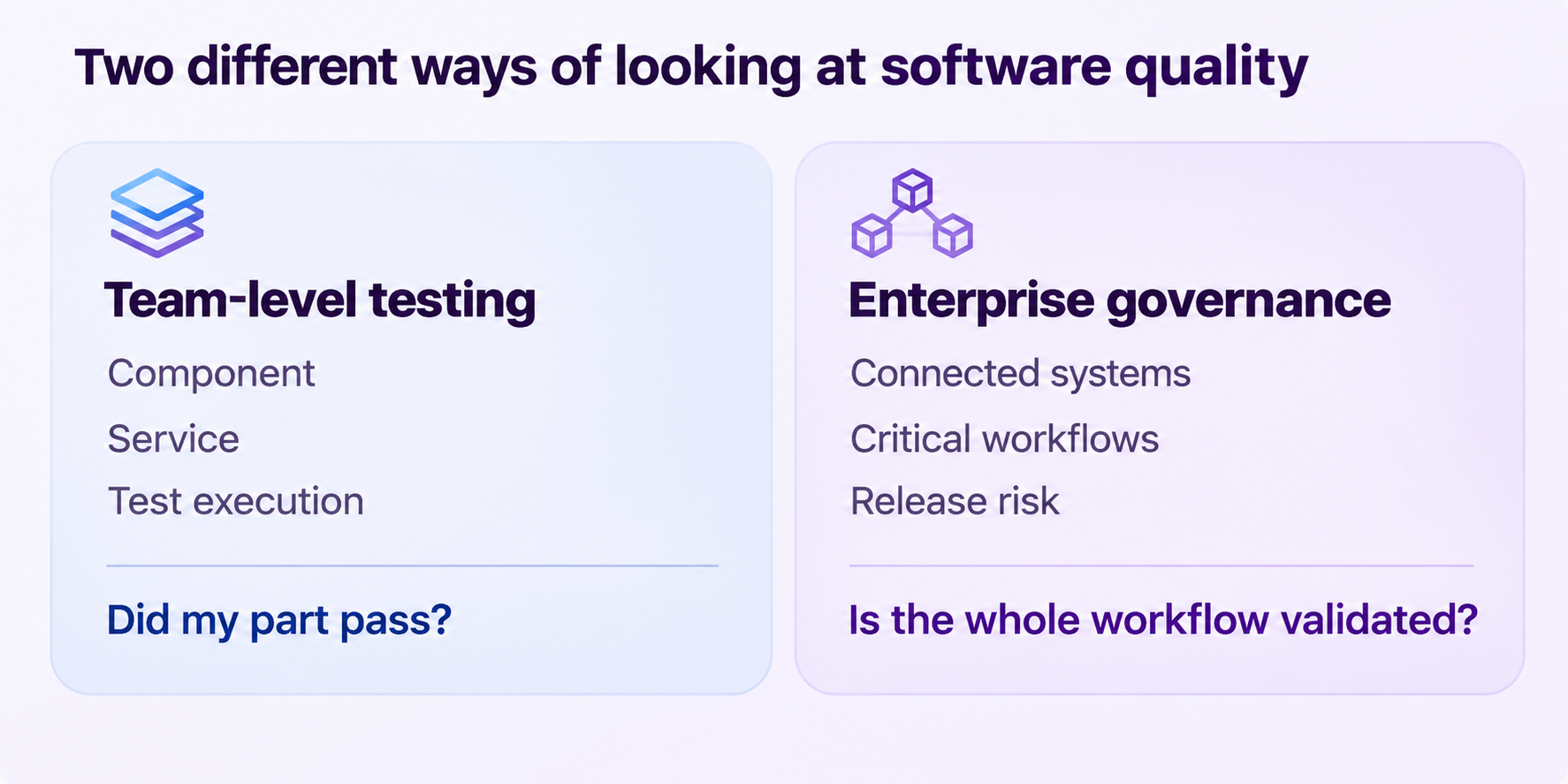
Team-level testing establishes whether individual components meet their checks. Enterprise-wide governance connects those results to the bigger picture: workflow reliability, cross-system dependencies, and release risk.
Why Does Software Quality Break Down Without Governance?
Consider a simple order-to-cash workflow. A customer places an order, the payment service authorises the transaction, the order management system processes it, and inventory gets updated before fulfilment begins.
Now imagine the payment goes through, but the downstream order management service fails to process the event. The checkout API is healthy, the payment tests have passed, and individual services may show no obvious errors. Yet the order never reaches fulfilment.
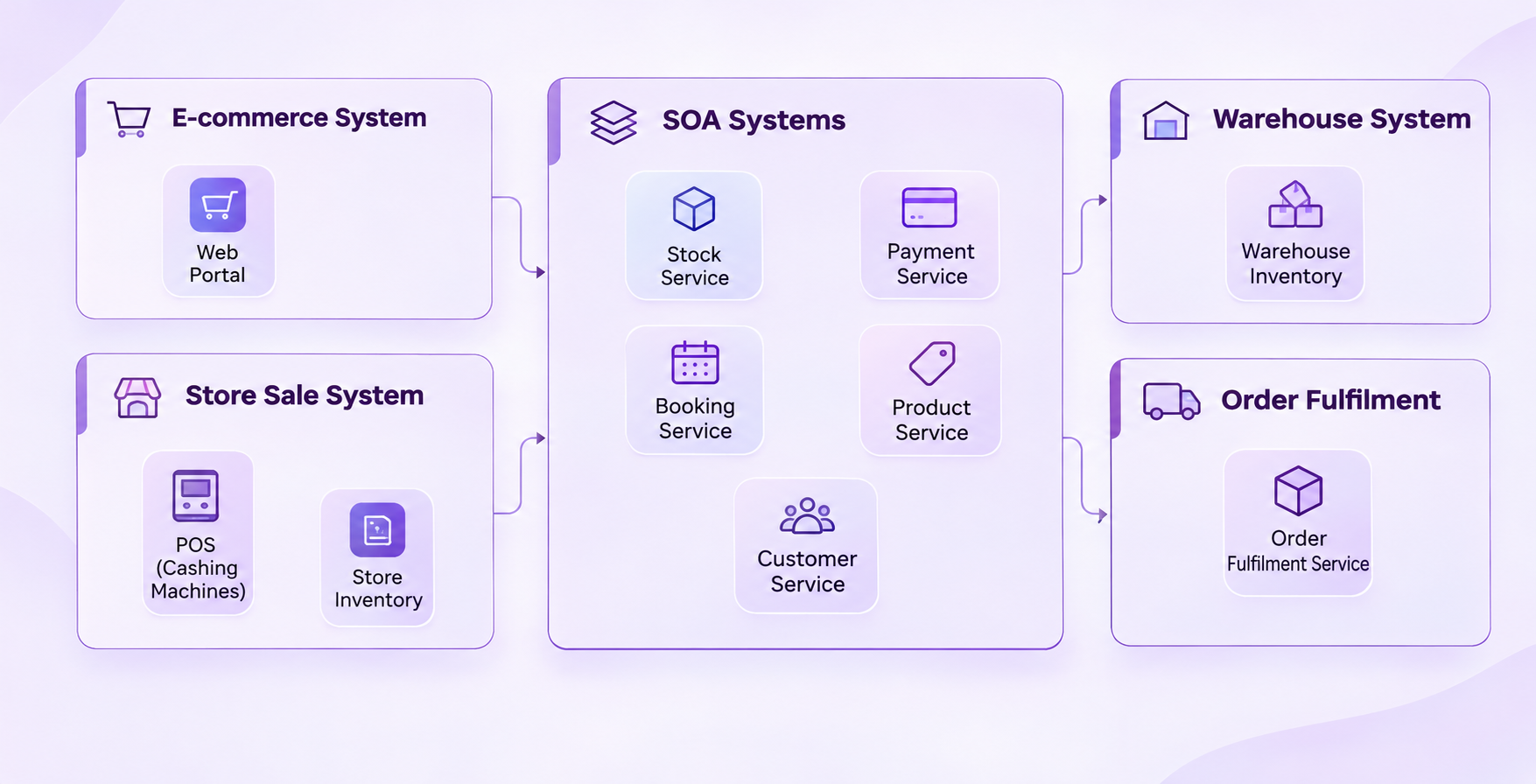
This is where enterprise software quality gets complicated. The problem often isn’t within an individual component, but in the dependencies and handoffs between them.
Three things make these gaps difficult to catch:
- Siloed metrics: Teams track test coverage, defects, and pass rates independently.
- Hidden dependencies: API or service changes can disrupt downstream workflows.
- Ownership gaps: No single team takes responsibility for validating the entire journey.
Without a unified view, individual services may pass their checks while the overall business workflow remains unverified.
Related Reading: Why traditional software quality strategies fail in modern enterprises
How Can Enterprise Validation Close the Governance Gap?
Closing the governance gap requires a shift in how organisations approach software quality. Instead of evaluating individual components in isolation, teams need to validate how their interconnected systems behave across critical business workflows.
This is where Enterprise Validation comes in. It connects evidence across UI interactions, APIs, databases, and downstream integrations to give teams a more complete picture of system behaviour.
Aquila brings this approach together through three capabilities:
- Critical Workflow Validation: Verify business-critical journeys across interconnected systems.
- Release Intelligence: Identify dependencies and potential risks that could affect business operations.
- Release Readiness: Bring validation evidence and risk visibility together to support informed release decisions.
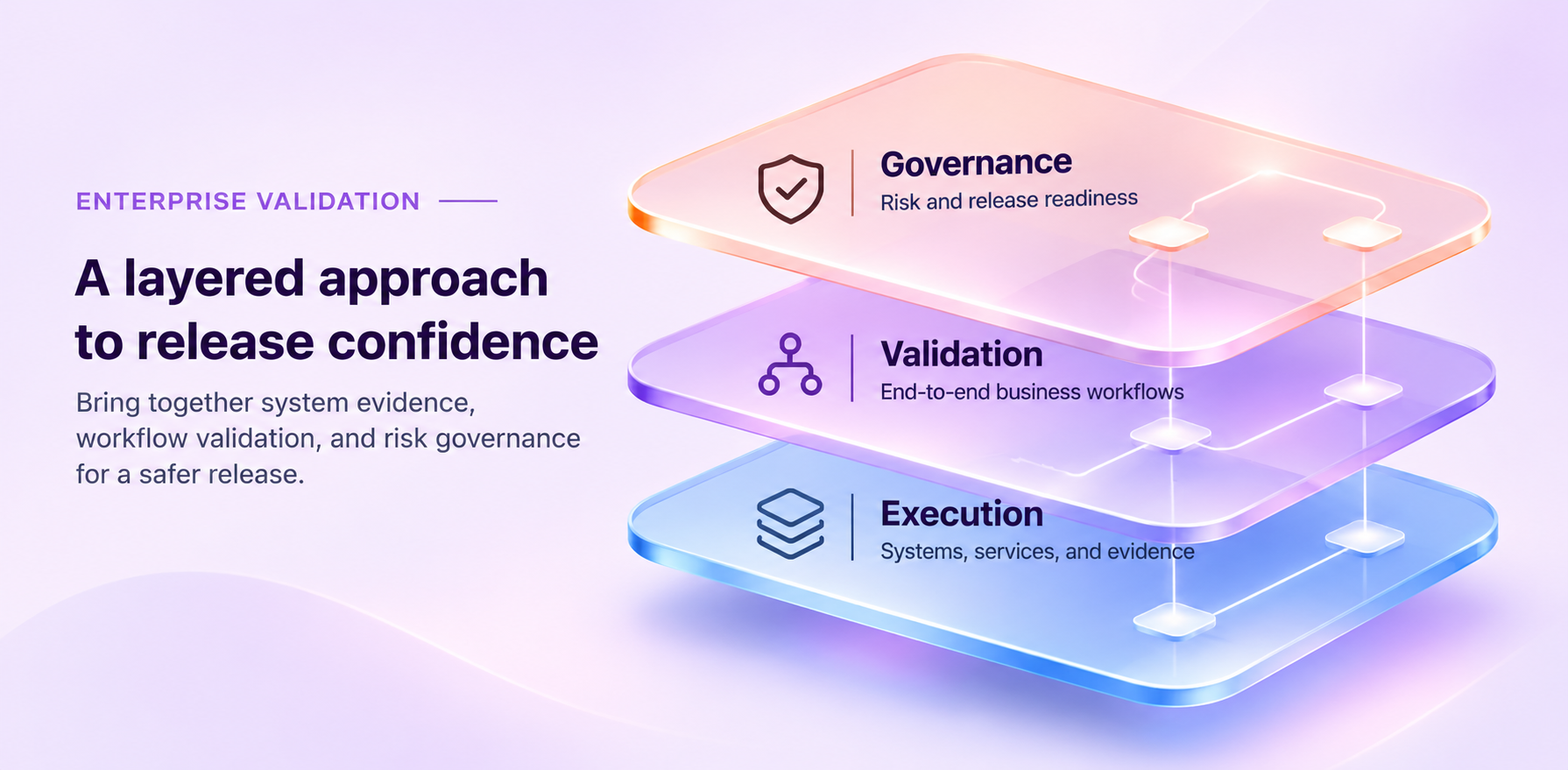
The goal isn’t to run more tests. It’s to understand what has been validated, where risks remain, and whether there’s enough evidence to make an informed release decision.
Related Reading: Release Readiness: The New KPI for Modern Engineering Teams
What Should Teams Know Before Approving an Enterprise Release?
A release approval should involve more than checking whether the test suite passed. Before signing off, teams need a clearer picture of what changed, how connected workflows behave, and what risks remain.
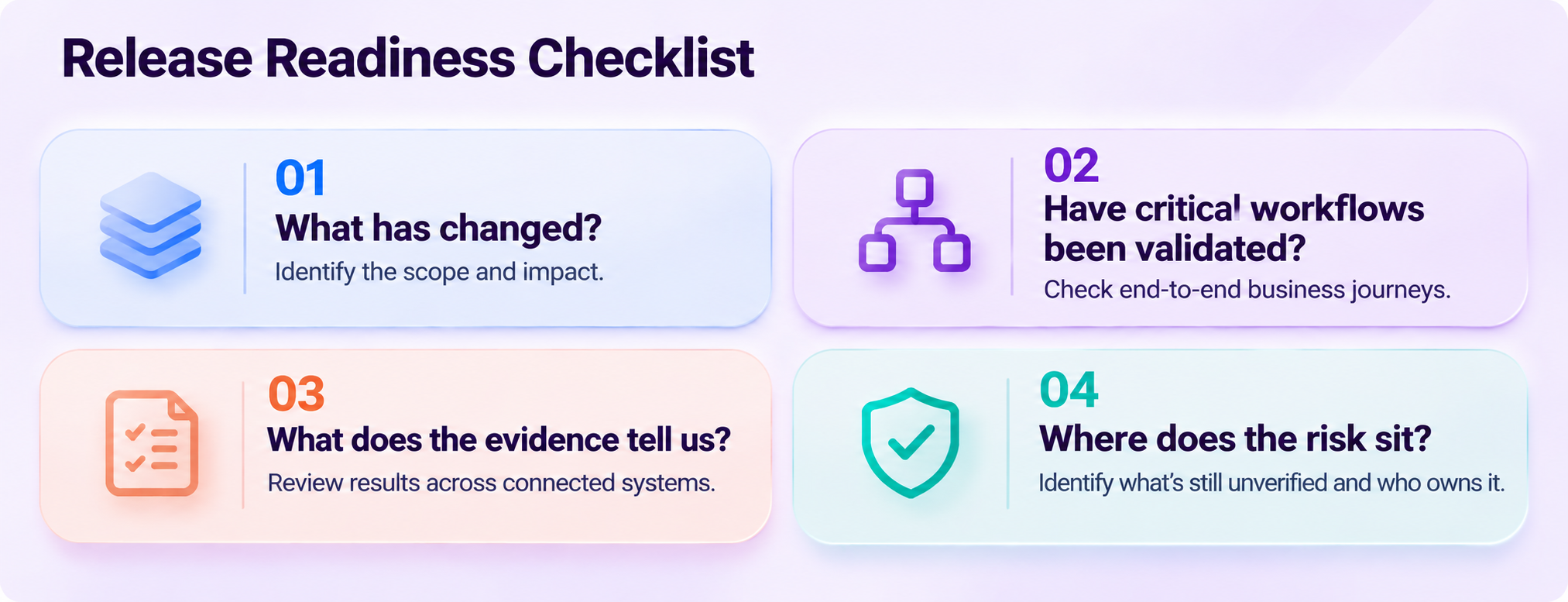
When teams can answer these questions with confidence, release approvals become more than a sign-off exercise. They become informed engineering decisions.
Related Reading: Why Enterprises Need Release Confidence, Not Just More Automation
Closing the Governance Gap in Enterprise Software Quality
A release isn’t truly ready just because every team has completed its checks. Someone needs to understand how the entire system behaves, what evidence supports that confidence, and where the remaining risks sit.
Software may be built and tested in separate pieces. But it is released as one connected system.
It is released as one connected system.
Frequently Asked Questions (FAQs)
What is the governance gap in enterprise software quality?
It is the lack of unified oversight across teams, systems, and workflows, making it difficult to assess overall software quality and release risk.
Why is testing alone insufficient for enterprise software quality?
Individual tests may verify components successfully without establishing whether interconnected business workflows function correctly.
How does enterprise validation differ from software testing?
Software testing checks individual components and functionality, while enterprise validation examines critical workflows across interconnected systems.
How does software quality governance improve release readiness?
It brings together validation evidence, risk visibility, and accountability to support better-informed release decisions.