For years, the software industry has treated these two ideas as if they were interchangeable:
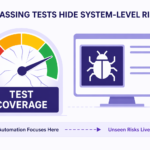
More automated tests = safer releases.
It sounds logical. But it’s increasingly untrue and expensive. Gartner estimates poor data quality alone costs organizations $12.9 million a year and while that figure is about data quality specifically, the underlying pattern is the same one that shows up in broken releases: the root cause usually isn’t a single broken feature. It’s a workflow nobody validated end to end.
Today’s enterprise applications rarely fail because a single feature broke. They fail because dozens of APIs, databases, third-party services, AI models, and internal business systems all have to work together — and traditional test automation was never built to validate that entire ecosystem at once.
That’s the real difference between Enterprise Validation and test automation. Enterprise Validation isn’t a testing technique or a smarter automation framework bolted onto your existing stack. It’s a different way of thinking about release quality altogether.
For teams building complex enterprise software, that difference isn’t academic — it’s the gap between a release that passes and a system that actually holds up.
What Is Test Automation?
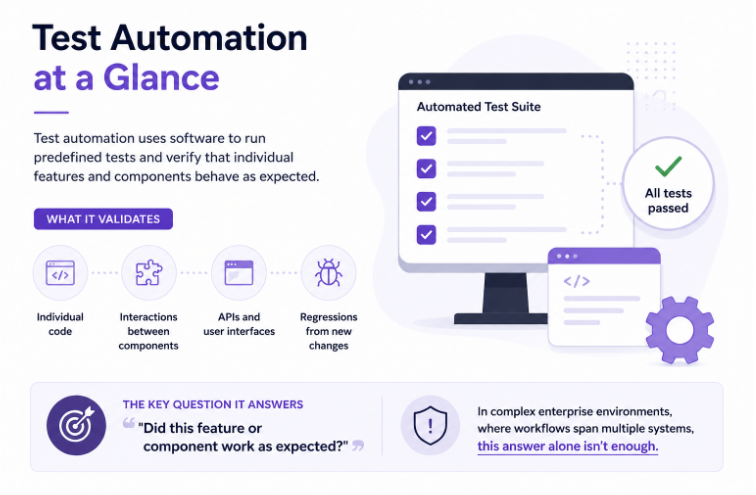
At its core, test automation is the practice of using software to execute predefined test cases automatically. It helps teams verify that individual features and components behave as expected, reducing manual effort and enabling faster, more reliable software releases.
Today, test automation is a critical part of modern software development. It commonly includes:
- Unit tests to validate individual pieces of code
- Integration tests to verify interactions between components
- API and UI tests to ensure applications function as expected
- Regression tests to catch issues introduced by new changes
In simple terms, test automation answers one key question:
“Did this feature or component work as expected?”
For validating individual application behavior, it’s incredibly effective. But in complex enterprise environments, where business workflows span multiple systems and services, that answer alone doesn’t always guarantee a safe release.
Related Reading: Why traditional software quality strategies fail in modern enterprise systems
What Is Enterprise Validation?
Enterprise Validation is the process of verifying that critical business workflows continue to work as expected across interconnected systems before a release reaches production. Rather than validating individual features or components, it validates the end-to-end business processes that keep an enterprise running.
Unlike traditional test automation, Enterprise Validation looks beyond pass/fail test results to answer a more important question:
“Is this release actually safe for the business?”
It does this by validating critical workflows across systems such as:
- Web and mobile applications
- APIs and microservices
- Databases
- Third-party integrations
- ERP, CRM, and other enterprise platforms
By focusing on complete business workflows instead of isolated test cases, Enterprise Validation helps teams identify release risks that traditional automation alone may not uncover, giving engineering teams greater confidence before every deployment.
For example:
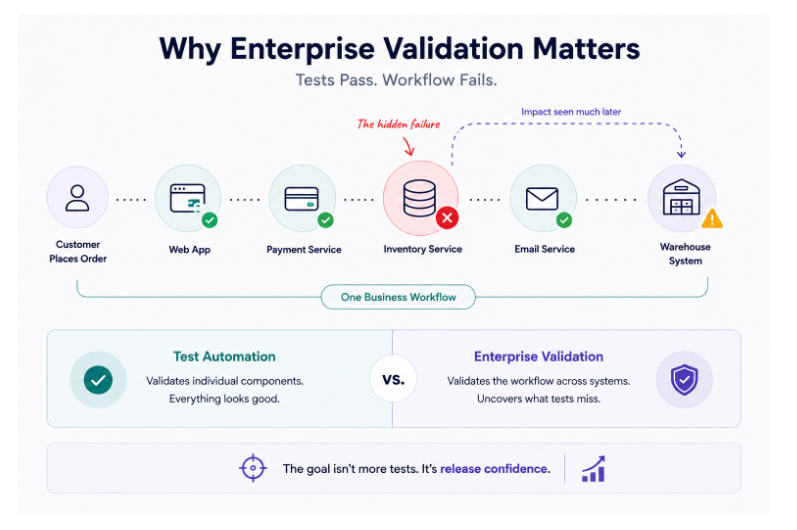
A customer places an order. The web app confirms it, the payment goes through, and the confirmation email arrives. Every individual test is green. But under load, a timing mismatch causes the inventory service to silently fail to decrement stock. Nothing crashes. No error is logged.
The order looks successful everywhere except the warehouse, where inventory is overstated until the customer eventually gets a cancellation notice. Test automation validated every component. It just never validated the workflow connecting them.
Related Reading: Why E2E Testing Is Insufficient Without Enterprise Validation in 2026
Why Does the Difference Matter?
It’s easy to see why these two concepts are often confused. The difference isn’t in how they work. It’s in what they’re trying to prove.
| Test Automation | Enterprise Validation |
| Verifies software components | Validates end-to-end business workflows |
| Focuses on individual parts of the system | Focuses on how systems work together |
| Checks expected application behavior | Checks real-world business outcomes |
| Finds software defects | Finds business and release risks |
| Tests components and integrations separately | Validates workflows across interconnected systems |
| Answers “Did it work?” | Answers “Is it safe to release?” |
| Builds confidence in the software | Builds confidence in the business |
Passing tests doesn’t always mean you’re ready to release.
Many engineering teams measure the success of a release by one metric: how many tests passed.
But customers don’t experience passing tests. They experience whether they can log in, complete a payment, submit a claim, or place an order— as the order example above shows, a workflow can look fine on every dashboard and still fail the customer.
That’s the gap and it’s rarely visible until it’s expensive, because a green dashboard doesn’t tell you whether the business actually still works
So if every test passed, why does the release still put the business at risk?
Because automation checks the parts. It was never built to watch the whole and as systems grow more interconnected, that’s exactly the gap Enterprise Validation closes.
Related Reading: Release Readiness: The New KPI for Modern Engineering Teams in 2026
Why Modern Enterprises Need Both?
Enterprise Validation isn’t a replacement for test automation — the two solve different problems, and neither one covers the other’s blind spot.
Test automation confirms that individual features, APIs, and components behave correctly. Enterprise Validation confirms that those same components, once connected, still deliver the outcome the business actually depends on — a login that works, a payment that clears, a claim that submits.
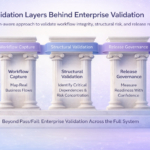
Think of it as two layers stacked on top of each other: automation verifies the parts, validation verifies the whole. As enterprise systems grow more distributed, relying on just one layer leaves a gap the other was built to close.
How Enterprise Validation Solves What Automation Alone Can’t
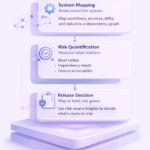
Here’s what that looks like in practice. Where automation stops at “did the test pass,” Enterprise Validation goes further:
- Traces critical workflows across the systems they actually run through not just the one service being tested
- Flags release risk before it reaches production, not after a customer hits it
- Surfaces the business impact of a change, not just its pass/fail status
This is the specific gap Aquila is built to close. It plugs into the workflows that matter most to your business — checkout, onboarding, claims, whatever’s core to your revenue and validates that they still hold together after every release, without asking you to rip out the automation you already trust.
The Bottom Line
The future of software quality isn’t about running more tests. It’s about making better release decisions.
Automation earned its place for a reason — it’s fast, it’s reliable, and it should stay exactly where it is in your pipeline. What it was never meant to carry alone is the weight of proving an entire business still works, end to end, every time something changes. That’s a different job, and pretending otherwise is how green dashboards and broken production releases end up coexisting.
Enterprise Validation is what closes that gap.
Want to see it in action? Explore how Aquila helps engineering teams identify release risks, validate critical business workflows, and ship with greater confidence. Schedule a personalized demo with our team.
Frequently Asked Questions (FAQs)
1. Is Enterprise Validation the same as test automation?
No. Test automation validates individual features, components, and integrations, while Enterprise Validation validates critical business workflows across interconnected systems. Test automation asks whether a specific part of the software works as expected. Enterprise Validation asks whether the complete workflow is ready for release.
2. Can Enterprise Validation replace test automation?
No. Enterprise Validation complements test automation rather than replacing it. Automated tests provide component-level coverage, while Enterprise Validation adds a broader layer of validation across the business workflows that connect those components.
3. Why can automated tests pass while a production workflow fails?
Automated tests may validate individual components successfully without validating how those components behave together in a complete business workflow. A change in an API, database, integration, or third-party service can therefore disrupt a critical workflow even when individual tests remain green.
4. How does Enterprise Validation improve release confidence?
Enterprise Validation improves release confidence by validating critical business workflows across interconnected systems before production. It helps engineering teams identify workflow failures and release risks that may not be visible through individual automated test results alone.