On July 19, 2024, the world started breaking before most people had finished their coffee.
It began with a routine software update.
CrowdStrike, pushed an update to its Falcon sensor. It had gone through the release process. It was signed off. Nothing about the deployment looked extraordinary.
Then Windows machines started crashing.
The update went through a release process and still produced catastrophic behavior in production.
That is the uncomfortable side of modern software releases: a green test suite can still leave blind spots.
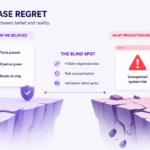
We call this release regret: the gap between what a team believed was safe to release and what the system actually proved in production.
The question isn’t simply what broke?
It’s why didn’t we see the risk before we shipped?
What Is Release Regret?
Release regret is what happens when a release looks safe on paper, but the system tells a different story in production.
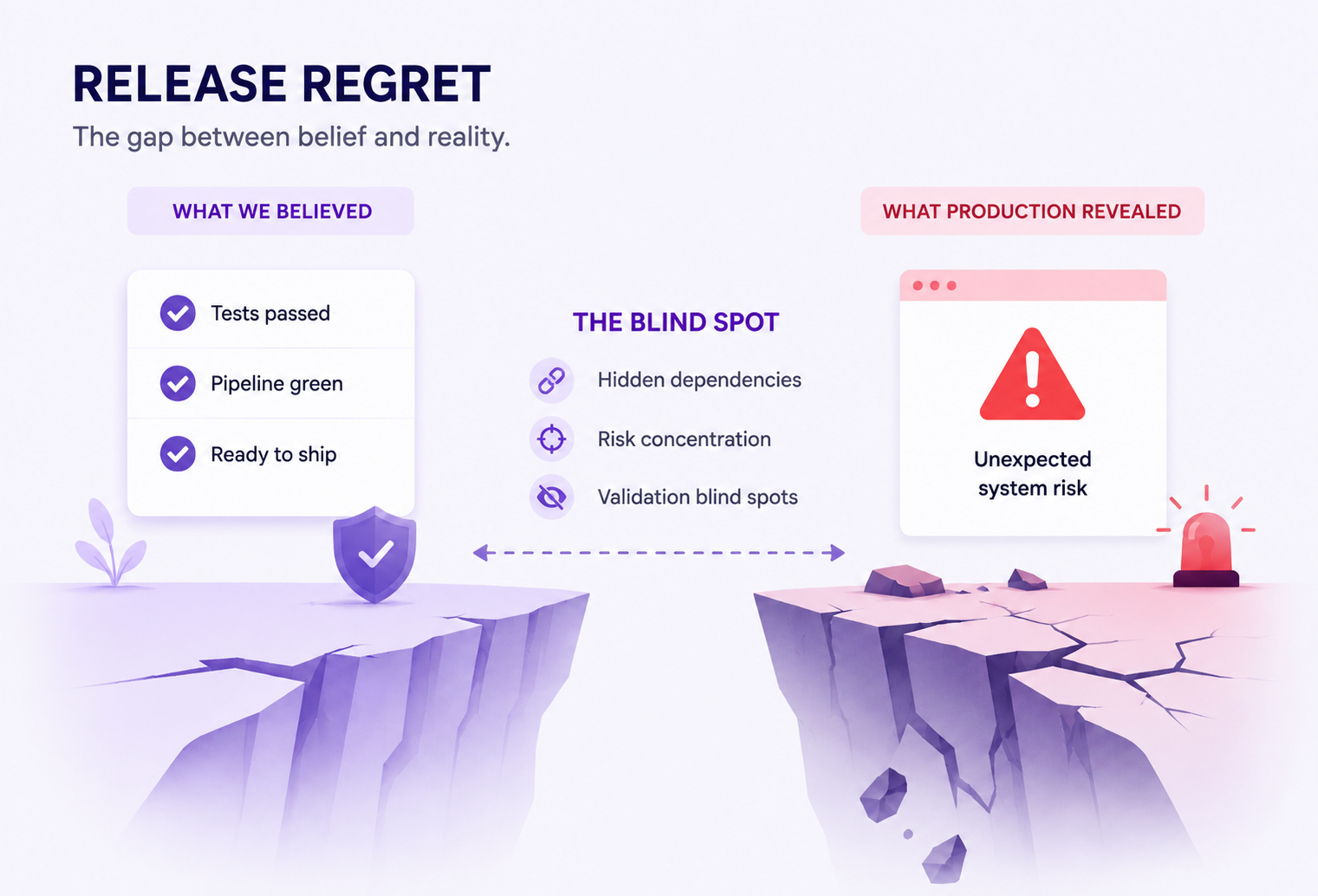
When passed tests don’t reveal the full release risk.
The pattern is familiar: tests pass, the pipeline is green, the release is approved and then something breaks that nobody expected.
A passing test answers one question:
Did the test pass?
Release confidence requires a bigger one:
Does the critical business workflow work? And do we understand the risk around it well enough to release?
That distinction matters because enterprise applications aren’t collections of isolated tests. They’re connected workflows, with dependencies crossing services, APIs, data, infrastructure, and third-party systems.
Why Do These Failures Slip Through Every Test?
Because modern systems don’t always fail inside the boundaries of an individual test case.
A change in one service can affect another workflow through a dependency nobody considered. Two components can work perfectly in isolation and still fail when their data, state, or assumptions collide.
Three blind spots show up repeatedly:
- Hidden dependencies: What else depends on what we changed?
- Risk concentration: Which critical workflows carry the greatest business impact?
- Validation gaps: What did we validate, and what did we leave unvalidated?
This is the problem with relying on test results alone. They tell you what worked. They don’t necessarily tell you what’s at risk or what’s missing.
Related Reading: Why traditional software quality strategies fail in modern enterprise systems
What Should You Ask Before Calling a Release Ready?
A better release review starts with the system, not just the failed test.
1. What actually changed?
Look beyond the code commit. Consider APIs, configuration, data, infrastructure, feature flags, and connected services.
2. Which critical workflows could be affected?
Map the change to the business workflows that depend on it. A small service change can have a large blast radius when it sits inside a critical customer journey.
3. Where is risk concentrated?
Look for shared dependencies, fragile workflows, historical instability, and areas where several risk signals overlap.
4. What’s missing from our validation?
Compare three things:
What changed → What we validated → What the business depended on
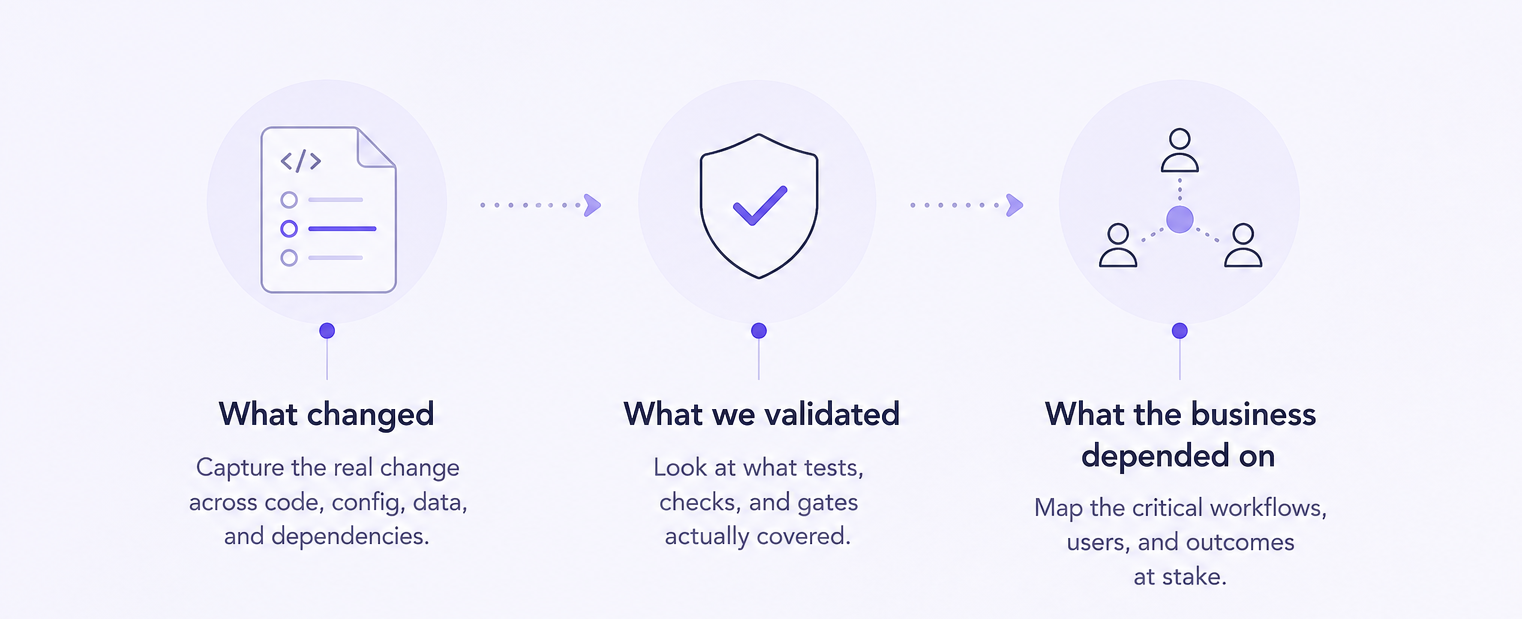
Connecting changes and validation to critical business workflows.
Then ask the uncomfortable question:
If we had known this before deployment, would we still have shipped?
That is the question that turns test results into a release decision.
Related Reading: Release Readiness: The New KPI for Modern Engineering Teams in 2026
From Testing to Release Readiness
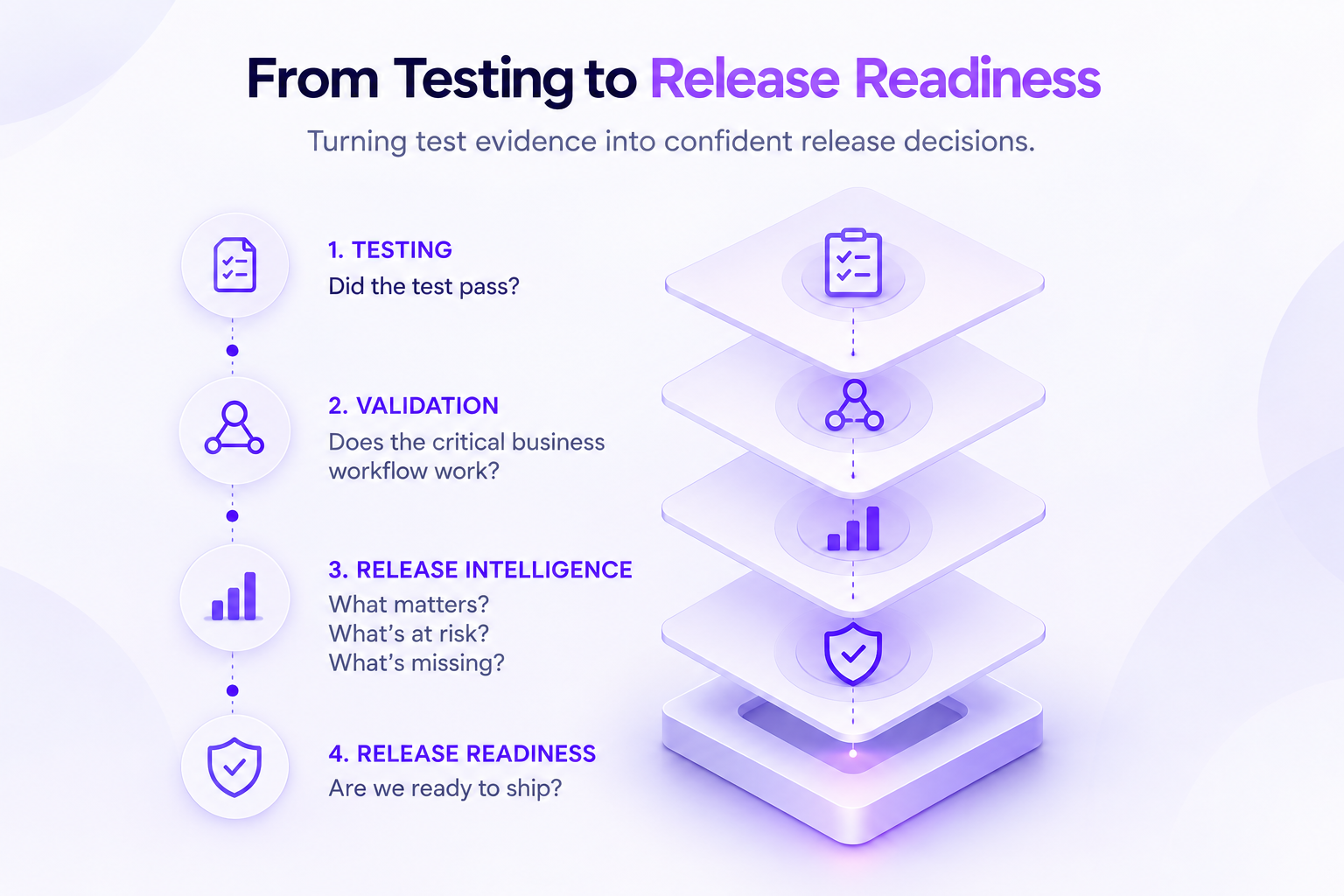
From test evidence to confident release decisions.
Testing creates the evidence. The next step is understanding what that evidence means for the system and the business.
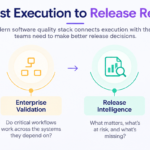
That is the shift Aquila calls Enterprise Validation: moving from executing tests to making better release decisions.
How Does Enterprise Validation Reduce Release Regret?
Enterprise Validation adds system-level context to test evidence.
Instead of looking only at whether predefined scenarios passed, it connects validation to critical workflows, dependencies, change impact, and risk concentration across the system.
That context becomes Release Intelligence helping teams understand:
- Where risk is concentrated
- How a change can propagate
- What validation gaps remain
- What deserves priority before release
The result is Release Readiness: a clearer, more explainable basis for deciding whether to ship or hold.
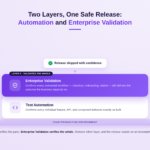
Aquila’s approach is built around this progression: testing creates the evidence; Enterprise Validation connects it to business workflows, risk, and readiness.
Related Reading: Enterprise Validation vs. Test Automation: What’s the Difference?
Can a Post-Mortem Prevent the Next Release Regret?
A failure shouldn’t simply produce another test case.
It should change what you understand about the system.
If a release exposed a fragile critical workflow, an overlooked dependency, or a validation gap, the lesson isn’t just “test this again.”
It’s:
What else could be affected the next time something changes?
That is where release failure becomes useful. It gives teams a clearer view of change impact, validation priority, and risk concentration before the next release.
Related Reading: Risk-Based Testing: Why Some Workflows Matter More Than Others
Conclusion: Don’t Just Explain the Failure. Explain the Blind Spot.
A production failure should leave you with more than a root cause.
It should show you where the system was fragile, which critical workflow was exposed, what your validation couldn’t see, and what information could have changed the release decision.
Because the goal isn’t to guarantee that nothing ever breaks.
It’s to make the important risks visible before they do.
Testing creates the evidence. Enterprise Validation connects that evidence to business workflows and risk. Release Intelligence turns that context into visibility. Release Readiness provides the basis for a better release decision.
See how Aquila connects business-critical workflows, system risk, and validation evidence to help teams make more confident release decisions.
Frequently Asked Questions (FAQs)
1. What is release regret?
Release regret is the gap between what a team believed was safe to release and what the system actually revealed in production. It happens when tests pass and a release looks ready, but hidden dependencies, risk, or validation gaps lead to unexpected failures.
2. Why can a release fail even when all tests pass?
Tests show whether the scenarios being tested passed. They don’t always reveal hidden dependencies, risk concentration, or validation gaps across interconnected systems and critical business workflows.
3. What should teams check before calling a release ready?
Teams should ask four questions: What actually changed? Which critical workflows could be affected? Where is risk concentrated? And what’s missing from validation? These questions connect test evidence to the broader system and business context.
4. How does Enterprise Validation reduce release regret?
Enterprise Validation adds system-level context to test evidence by connecting validation to critical workflows, dependencies, change impact, and risk concentration. This helps teams identify where risk is concentrated, how changes can propagate, and what validation gaps remain.