An outage ends, services recover, and dashboards eventually return to normal.
And then comes the familiar question: What are we going to do to make sure this doesn’t happen again?
When the Salesforce Hyperforce outage on September 16, 2026, disrupted services for over seven hours, it offered a stark reminder of how fragile even large-scale cloud environments can be.
But for CTOs and engineering leaders, the bigger question is more uncomfortable: Why can systems backed by extensive testing pipelines still fail in production?
The answer isn’t necessarily that teams aren’t testing enough. It’s that passing tests doesn’t tell the whole story.
Here are three lessons engineering teams should take away from the incident.
Lesson 1: A Green Dashboard Isn’t a Green Light
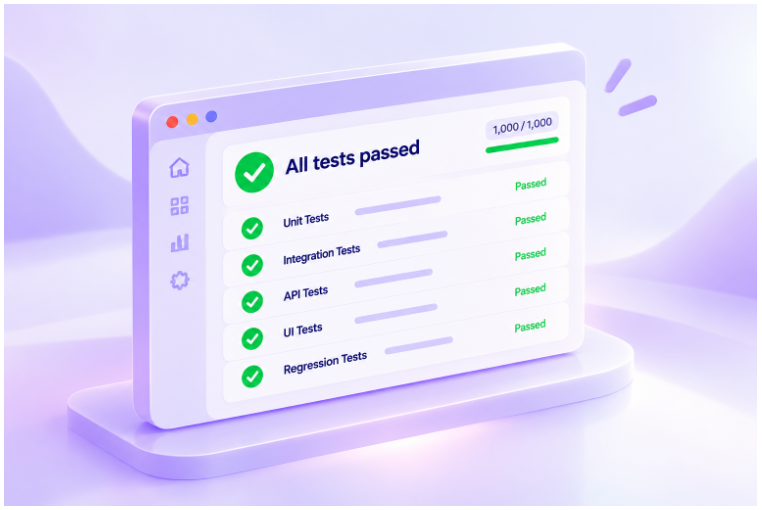
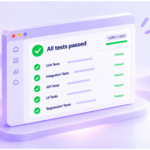
A thousand tests pass. The dashboard turns green. Everyone breathes a little easier.
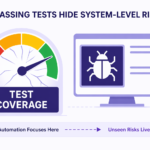
But here’s the catch: your tests can only tell you what they were designed to check.
They can confirm that individual features and workflows behave as expected, but they can’t automatically tell you how the wider system will respond when dependencies interact in unexpected ways.
A green test report is reassuring. Treating it as proof that the entire system is ready to go live? That’s a different story.
The takeaway: Know what your tests have confirmed, but don’t confuse that with knowing every risk you’re releasing into production.
Related Reading: Why traditional software quality strategies fail in modern enterprise systems
Lesson 2: The Risk Lives Between the Systems
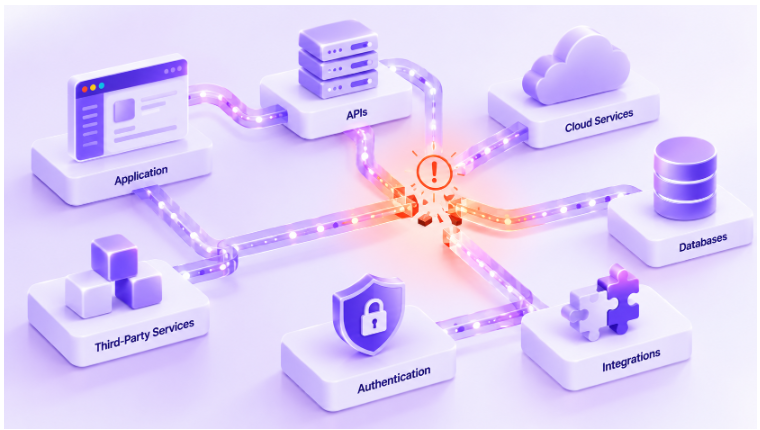
The infrastructure team owns infrastructure. QA owns testing. The application team owns the application.
It all sounds neat, tidy, and logical, except enterprise systems don’t work according to your org chart.
An application depends on APIs, services, authentication, databases, and integrations. When one part behaves unexpectedly, the impact can travel well beyond the team that owns it.
The takeaway: Understand how the pieces work together, especially when business-critical workflows depend on them.
Related Reading: What Is Blast Radius in Enterprise Software Systems — And Why It Matters
Lesson 3: Ask Better Questions Before You Release
- Did the tests pass? ✅
- Did the deployment checks clear? ✅
- Are we good to go? Apparently.
But before giving a release the green light, ask a few harder questions.
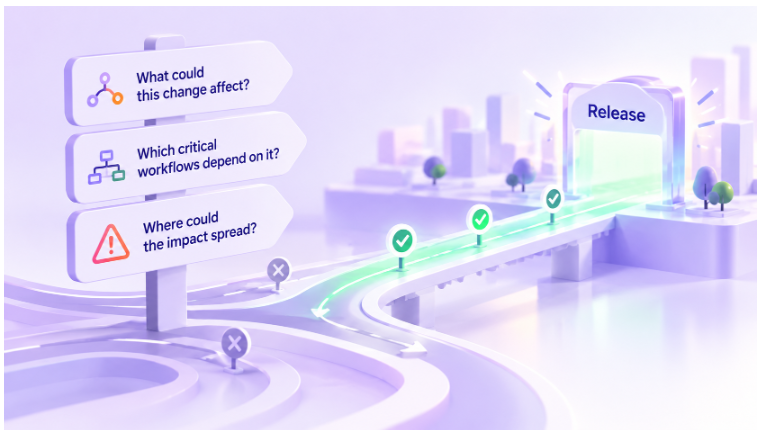
- What could this change affect?
- Which critical workflows depend on it?
- Where could the impact spread?
These aren’t questions you can always answer with another green tick. They require a broader understanding of system behaviour and potential risk.
The takeaway: Don’t stop at proving the software passed its tests. Ask whether you understand enough about the wider system to make the release decision.
Related Reading: Risk-Based Testing: Why Some Workflows Matter More Than Others
So, What Does Better Release Confidence Look Like?
You can’t solve a system-wide problem by looking at individual test results alone.
That’s where Enterprise Validation comes in.
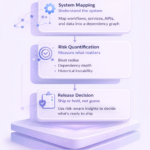
Instead of asking whether each component passed its checks, it looks at the bigger picture: do the critical workflows connecting those components actually work as expected?
From UI and APIs to databases, dependencies, and business-critical processes, Enterprise Validation helps teams understand how the pieces behave together and where release risk might be hiding.
At Aquila, that’s the problem we’re solving: helping engineering teams move beyond green checkmarks towards better-informed release decisions.
Because the goal isn’t just to know what passed.
It’s to understand what you’re about to release.
Related Reading: Why Enterprises Need Release Confidence, Not Just More Automation
The Final Word
No testing approach can guarantee that nothing will ever break. But teams can do a better job of understanding the risks before they release.
Because “the tests passed” isn’t the same as “we’re ready.”
A green test report is a good start. Knowing what it tells you about the wider system is what really matters.
The goal isn’t just to ship with passing tests. It’s to know what you’re signing off on.
Ready to look beyond green checkmarks?
Schedule a demo with Aquila and discover how Enterprise Validation can help your team understand system-wide risk and make more informed release decisions.